INTRODUCTION
Amidst growing evidence supporting a correlation between student well-being and academic performance, the HAPPIER project aims to provide definitive insights into the critical causality between the two, through a groundbreaking longitudinal study.
Social science research conducted in the workplace clearly suggests that wellbeing leads to improved performance, and not vice versa. Consequently, we propose that observational studies of cohorts, with a focus on student well-being, might not only address the causal ambiguity in demographic research, but could also indirectly foster an environment where academic performance can thrive.
To explore this theory, we are launching an experimental project designed to test the cause-effect relationship between student well-being and academic performance, aiming to provide clearer insights into how prioritizing the well-being of students could positively impact their academic outcomes.
 The Happiness and Pupil Performance Educational Research (HAPPIER) Project
Research Aim: To decisively explore how enhancing student well-being impacts performance in diverse educational settings.
Target Group:
Grades 9-11 (ages 15-17) in diverse English-speaking schools based in at least five countries (1)
Study Design:
In 2026, groups of students around the world will take a comprehensive course on the science of happiness and peer support. This hybrid course, combining self-paced content and online forums with onsite reinforcement via classroom and extramural implementation, will provide students with critical life skills proven to boost wellbeing, combining theory and practical application.
Metrics:
Wellbeing Metrics: Psychological well-being (PWB), self-efficacy (2), depression.
Academic Metrics: Attendance, grades, creativity. (3)
Materials:
Stage 1 (Sep-Dec, 2025): Science of Happiness Toolkit (educators)
Stage 2 (Jan-Dec, 2026) Science of Happiness Proficiency Course (students)
Peer Support Course (voluntary, on completion of proficiency course)
Methods:
Based on the results of our previous interventions in both Asia and Europe, the HAPPIER Project will implement a combination of time tested as well as innovative strategies:
- Facilitate integration with existing curricula: Educators will be provided with lesson plans and materials designed for easy integration with existing curricula.
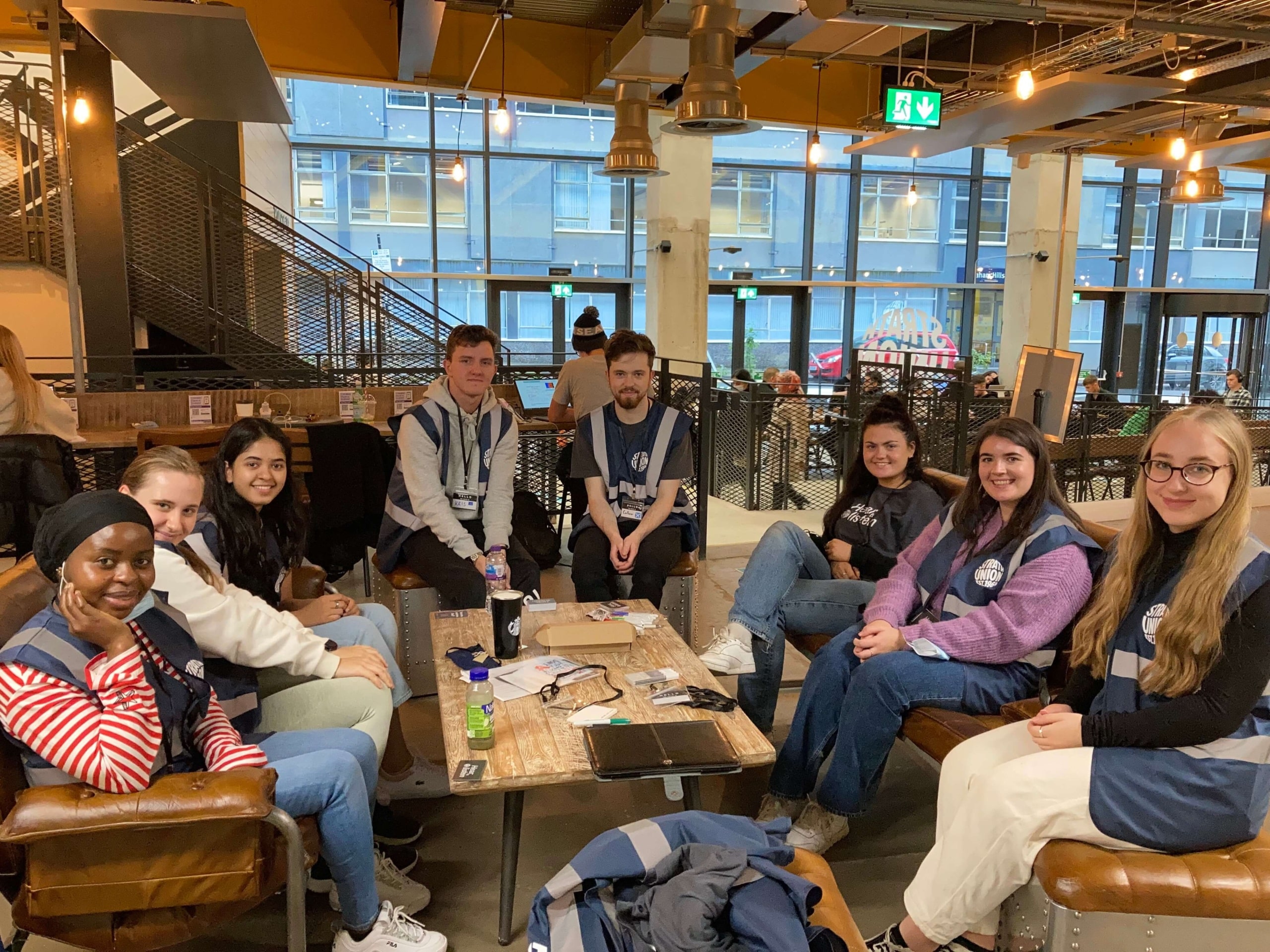
- Combine educational and peer support components: A research project (conducted in 2022 at the University of Strathclyde in Scotland) that trained student volunteers to practice peer wellbeing support had a widely recognized impact on student wellbeing. An opportunity to learn about peer support skills (for volunteers) as well as life skills for wellbeing, will be provided as a component of the HAPPIER project.
- Foster engagement through hybrid online / onsite learning, facilitated by a flipped classroom approach: Students will complete theoretical components online and practical components (involving the practice of essential life skills) offline, as well as engage in reflection and discussion over both components in class and via online forums.
Benefits for Participants:
-
Educators will receive free training, including:
- The Teaching Mental Health and Wellbeing toolkit, consisting of the full online course as well as slides and lesson plans that can be easily integrated into existing curricula. Educators are free to use these materials as they wish.
- Free (voluntary) access to a live weekly Q & A session with the Pursuit of Happiness Team trainers and fellow participants, before and during the project.
-
Students will receive free access to the Science of Happiness Course
-
Students who volunteer to provide peer wellbeing support during the project will receive free access to a Peer Wellbeing Support course.
-
Both students and educators will receive certificates on successful completion of the courses.
-
Participating schools will be mentioned in publications reporting the results.
-
Based on the results of previous projects focused on life skills, both in Asia and Europe, we expect that both students and staff will become significantly happier and more productive!
Minimum Requirements for Project Participation:
- Participants should be educators or administrators in English speaking secondary schools, in any country.
- Educators should complete the Toolkit Course, including quizzes and exercises.
NOTE: Partipation in the weekly webinar is recommended, but not required. The webinars provide an opportunity to participate in Q&A and share ideas about:
1. How to integrate the toolkit content into curricula, partially or fully.
2. How to motivate students to complete the science of happiness course
NOTES
1. We focus on this age group based on the ability to engage with existential questions and the practical application of the science of wellbeing.
2. Self-efficacy is widely recognized as closely correlated with academic achievement.
3. The ability to think “out of the box” may be especially valuable in a rapidly changing world. Creativity and insight are linked to neuroplasticity and wellbeing, specifically positive emotions.
Join the HAPPIER project! Apply Here
Questions about the HAPPIER project? Contact Us
BIBLIOGRAPHY
Amholt, T.T. et al. (2020) Psychological well-being and academic achievement among school-aged children: A systematic review – child indicators research, SpringerLink. Available at: https://link.springer.com/article/10.1007/s12187-020-09725-9 (Accessed: 07 March 2024).
Aru, Jaan, et al. “Mental navigation and the neural mechanisms of insight.” Trends in Neurosciences, vol. 46, no. 2, Feb. 2023, pp. 100–109, https://doi.org/10.1016/j.tins.2022.11.002.
Beaty, Roger E., et al. “Robust prediction of individual creative ability from brain functional connectivity.” Proceedings of the National Academy of Sciences, vol. 115, no. 5, 16 Jan. 2018, pp. 1087–1092, https://doi.org/10.1073/pnas.1713532115.
Carpenter, Wesley. “The AHA! Moment: The Science behind Creative Insights.” IntechOpen, IntechOpen, 27 Nov. 2019, www.intechopen.com/chapters/65968.
Gamazo, Adriana, and Fernando Martínez-Abad. “An exploration of factors linked to academic performance in Pisa 2018 through data mining techniques.” Frontiers in Psychology, vol. 11, 27 Nov. 2020, https://doi.org/10.3389/fpsyg.2020.575167.
Høigaard, Rune, et al. “Academic self-efficacy mediates the effects of school psychological climate on academic achievement.” School Psychology Quarterly, vol. 30, no. 1, Mar. 2015, pp. 64–74, https://doi.org/10.1037/spq0000056.
Klapp, T., Klapp, A. and Gustafsson, J.-E. (2023) ‘Relations between students’ well-being and academic achievement: Evidence from swedish compulsory school’, European Journal of Psychology of Education [Preprint]. doi:10.1007/s10212-023-00690-9.
Kounios, John, and Mark Beeman. “The aha! moment.” Current Directions in Psychological Science, vol. 18, no. 4, Aug. 2009, pp. 210–216, https://doi.org/10.1111/j.1467-8721.2009.01638.x.
Lyons, Michael D., and E. Scott Huebner. “Academic characteristics of early adolescents with higher levels of life satisfaction.” Applied Research in Quality of Life, vol. 11, no. 3, 9 Feb. 2015, pp. 757–771, https://doi.org/10.1007/s11482-015-9394-y.
Mavroveli, Stella, and María José Sánchez-Ruiz. “Trait emotional intelligence influences on academic achievement and school behaviour.” British Journal of Educational Psychology, vol. 81, no. 1, Mar. 2011, pp. 112–134, https://doi.org/10.1348/2044-8279.002009.
Ng, Zi Jia, et al. “Life satisfaction and academic performance in early adolescents: Evidence for reciprocal association.” Journal of School Psychology, vol. 53, no. 6, Dec. 2015, pp. 479–491, https://doi.org/10.1016/j.jsp.2015.09.004.
Rüppel, F., et al. “The influence of psychological well-being on academic success.” Journal of Public Health, vol. 23, no. 1, 30 Jan. 2015, pp. 15–24, https://doi.org/10.1007/s10389-015-0654-y.
Subramaniam, Karuna, et al. “A brain mechanism for facilitation of insight by positive affect.” Journal of Cognitive Neuroscience, vol. 21, no. 3, 1 Mar. 2009, pp. 415–432, https://doi.org/10.1162/jocn.2009.21057.
Suldo, Shannon, et al. “Longitudinal academic outcomes predicted by early adolescents’ subjective well-being, psychopathology, and mental health status yielded from a dual factor model.” The Journal of Positive Psychology, vol. 6, no. 1, Jan. 2011, pp. 17–30, https://doi.org/10.1080/17439760.2010.536774.
Susana C., et al. “The role of positive psychology constructs in predicting mental health and academic achievement in children and adolescents: A two-year longitudinal study.” Journal of Happiness Studies, vol. 12, no. 6, 25 Feb. 2011, pp. 1049–1062, https://doi.org/10.1007/s10902-010-9244-4.
Van Batenburg-Eddes, Tamara, and Jelle Jolles. “How does emotional wellbeing relate to underachievement in a general population sample of young adolescents: A neurocognitive perspective.” Frontiers in Psychology, vol. 4, 2013, https://doi.org/10.3389/fpsyg.2013.00673.